Skip to main content
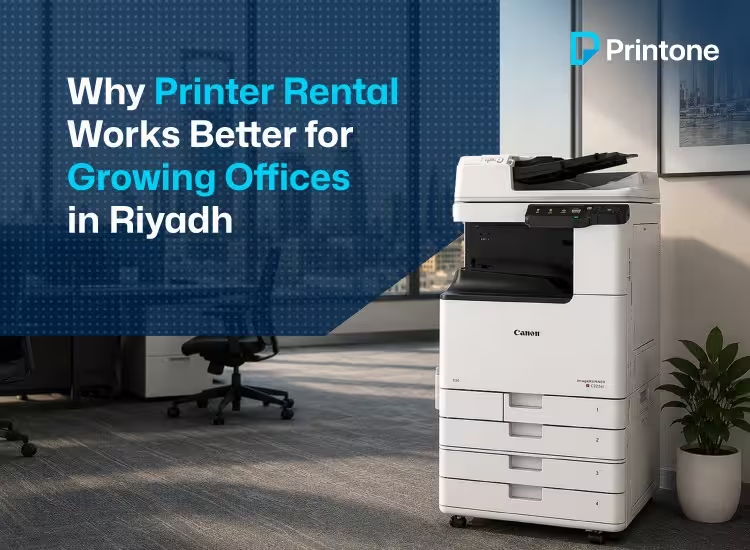

In many Riyadh offices, printers are treated as background equipment.
They are expected to work. No one thinks about them until something stops.
Then everything slows down.
Printing is tied to daily operations. Contracts, reports, internal approvals. When printers fail, work doesn’t move the way it should.
Ownership creates gaps over time
At the beginning, owning a printer feels straightforward.
But over time:
- Usage increases
- Performance drops
- Issues become frequent
There is no structured support behind it.
Most businesses rely on occasional fixes. That approach works temporarily, not consistently.
Rental removes the responsibility from internal teams
Printer issues often fall on IT or admin teams.
Not because they are responsible, but because there is no one else.
This leads to:
- Delays in fixing issues
- Temporary solutions
- Repeated problems
With rental, this responsibility shifts completely.
Support is already built into the service.
On-site handling keeps operations moving
In Riyadh, waiting is what creates the biggest disruption.
Remote support can’t solve most printer issues.
On-site handling means:
- The problem is seen directly
- Fixed in the actual working environment
- Tested immediately
This reduces downtime significantly.
Rental adapts as the business grows
Office needs don’t stay the same.
More employees, more printing, different usage patterns.
Owned printers don’t adjust easily. Businesses either continue with an inefficient setup or invest again.
Rental allows flexibility without overcommitting.
Stability matters more than ownership
The goal is not to own equipment.
The goal is to keep operations running without interruption.
That requires:
- Consistent performance
- Fast response when issues happen
- Proper handling over time
Rental provides that structure.
For growing offices in Riyadh, printer rental is not an alternative.
It’s a more practical way to avoid ongoing issues and keep daily work running without delays.