Skip to main content
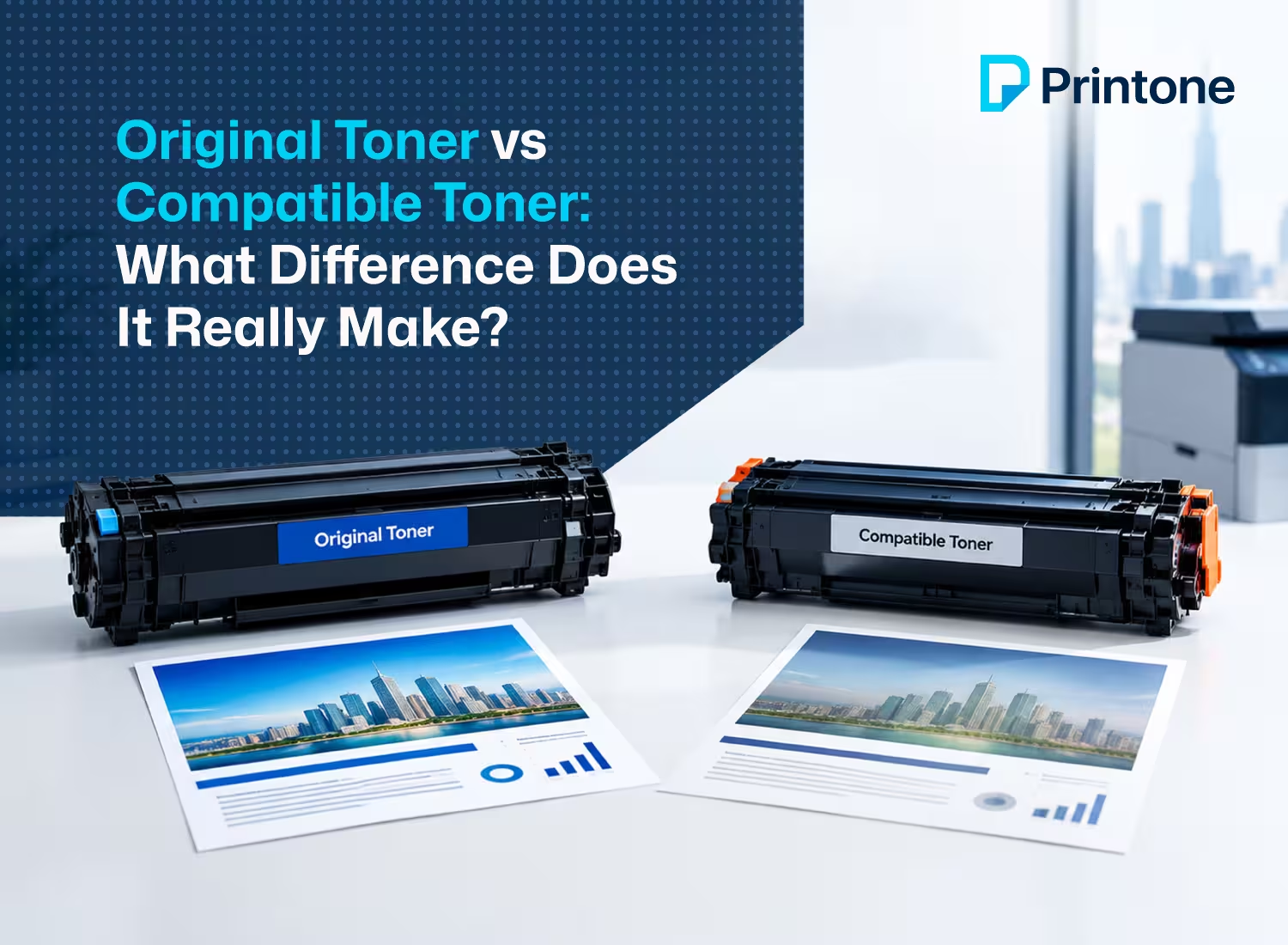

Two toner cartridges can look almost identical.
Put them side by side and, at first glance, there may not be much to separate them. One carries the original manufacturer’s branding. The other is made by a third-party manufacturer and sold at a lower price.
But a toner cartridge is not simply a plastic box filled with powder.
Inside it are several components that have to work together with the printer’s imaging system. The quality of those components can affect the way the printer performs, the consistency of the output and, over time, the amount of maintenance the machine requires.
This is why the difference between original toner and compatible toner is worth understanding before choosing based on price alone.
What Is Original Toner?
Original toner, also called OEM toner, is manufactured by the printer brand or supplied according to the manufacturer’s specifications.
For example, a Canon printer uses toner developed for its particular printing system. The same applies to HP, Ricoh, Brother, Xerox and other major printer brands.
The toner formulation, cartridge construction, drum and other components are designed to work with the specific printer models they support.
That compatibility is important because laser printing is a controlled process. Toner has to transfer correctly, fuse to the paper at the required temperature and produce consistent results throughout the cartridge’s expected life.
What Is Compatible Toner?
Compatible toner is produced by a third-party manufacturer rather than the original printer manufacturer.
Some compatible cartridges are made to reasonable standards and can work well in certain printers. Others are produced mainly to compete on price.
This means that “compatible” does not automatically mean “bad”. The quality can vary considerably between manufacturers and products.
The important point is that the cartridge is not necessarily built to the same specifications or tested through the same manufacturing process as the original.
The Difference Starts Inside the Cartridge
The outside of a toner cartridge tells you very little about what is happening inside. Several components affect how the cartridge performs.
1. Drum Quality
The drum is one of the key parts involved in creating the image on the page.
Its surface receives the image information and transfers the toner during the printing process. The quality and condition of the drum directly affect the final print.
A poor-quality drum can contribute to:
● Uneven print density
● Lines and streaks
● Background marks
● Repeated spots
● Faded areas
● Inconsistent output
A cartridge that looks fine externally can still contain a drum that does not perform consistently.
2. Toner Formulation
Toner is engineered for a particular printing system.
Particle size, composition and melting characteristics all influence how toner transfers and fuses onto paper.
If the toner does not behave as expected, the result can be inconsistent print density, poor image quality or problems with fusing.
This becomes more noticeable in offices that print large volumes every day. 3. Cartridge Construction
The cartridge has to fit correctly inside the printer.
Small differences in dimensions, components and tolerances can affect how the cartridge seats and interacts with the printer’s internal mechanisms.
A cartridge that is not manufactured accurately can create operational problems that have nothing to do with the amount of toner inside it.
4. Page Yield
Price per cartridge is only one part of the calculation.
The more useful figure is the cost per usable page.
Suppose one cartridge costs less but produces fewer usable pages, requires replacement sooner or produces pages that need to be reprinted because of poor quality.
The initial saving may not remain a saving.
For offices with high printing volumes, this difference can become significant over a year.
Can Compatible Toner Damage a Printer?
There is no simple answer that applies to every compatible cartridge.
A properly manufactured compatible cartridge may work without causing a problem. However, low-quality consumables can increase the risk of print defects, leakage, poor fusing and other cartridge-related issues.
The effect also depends on the printer, cartridge design, usage volume and quality of the consumable.
For businesses that depend heavily on printing, the question is not only whether a cartridge works when installed.
The bigger question is how consistently it works throughout its expected use.
Why Print Quality Changes With Toner
When a printer produces a poor-quality document, the printer itself is not always the problem.
The toner and imaging components should also be considered.
For example, you may notice:
● Faded text
● Grey background on white pages
● Repeated marks
● Vertical lines
● Uneven black areas
● Smudging
● Poor image definition
These issues can have different causes, including the toner cartridge, drum, fuser, paper, printer settings or other internal components.
That is why repeatedly replacing cartridges without identifying the actual cause can become expensive.
A technician should look at the printer as a complete system.
Original Toner Is Not Only About Print Quality
The argument for original toner is often reduced to one thing: better printing. There is more to it.
For businesses using printers every day, the consumable also forms part of the machine’s operating cost and maintenance requirement.
Using the recommended consumables can help maintain:
Consistent output
Documents remain more uniform from one print run to another.
Predictable cartridge performance
The expected yield and operating characteristics are easier to plan around.
Fewer print-related interruptions
Good-quality consumables reduce the likelihood of issues associated with poor cartridge construction.
Better equipment care
The printer operates with consumables designed for its printing system.
More reliable business printing
For contracts, invoices, reports, proposals and other important documents, consistency matters.
Is Cheaper Toner Really Cheaper?
This is where businesses should look beyond the purchase price.
Consider the full printing cost:
Cartridge price + page yield + reprints + service calls + downtime + replacement parts A cheaper cartridge may reduce the first number while increasing one or more of the others. For a home user printing a few pages a week, the difference may be small. For a company printing thousands of pages every month, it is a different calculation. A small difference in cartridge performance can become a sizeable operating cost over time.
Original Toner and Printer Rental
For businesses renting printers, consumable quality becomes even more important.
The printer is part of a larger service arrangement that can include maintenance, technical support and toner supply.
At Printone, we use original toners and genuine consumables for the supported printer equipment we provide.
This helps us maintain consistency across the equipment we rent and service.
Our team also considers the printer model, expected print volume and type of documents before recommending equipment.
For example, a small office printing mainly invoices and correspondence may have very different requirements from a construction company producing large volumes of project documentation.
The printer and consumables should match the workload.
How to Reduce Printer Consumable Costs Without Cutting Quality
Using original toner does not mean ignoring cost control.
There are several better ways to reduce printing expenses.
Choose the correct printer
A printer designed for your actual monthly volume is usually more economical than using a small machine beyond its intended workload.
Monitor print volumes
Track how much each department or machine is printing. This helps identify machines that are overloaded or barely being used.
Use duplex printing where practical
Printing on both sides reduces paper consumption and can lower the overall cost of document production.
Maintain the printer
Regular maintenance helps identify worn components before they become larger problems. Review the complete cost per page
Do not compare cartridges only by their purchase price. Look at expected yield, service requirements and the cost of reprints.
What Should You Check Before Buying Toner?
Before choosing a toner cartridge, check:
● Printer brand and exact model
● Cartridge model or part number
● Expected page yield
● Whether the cartridge is original or compatible
● Supplier reputation
● Warranty or replacement policy
● Manufacturer recommendations
● Your expected monthly print volume
If you are unsure which cartridge your printer requires, check the printer model or speak to a qualified service provider.
Using the wrong cartridge can create avoidable problems.
Original Toner vs Compatible Toner: A Practical Comparison
Factor Original Toner Compatible Toner Manufacturer Original printer manufacturer Third-party manufacturer
Printer
compatibility
Designed for supported printer models
Designed to work with specific models
Quality
consistency
Generally more predictable Can vary by manufacturer
Initial price Usually higher Usually lower Page yield Manufacturer-rated Depends on the product
Component quality
consistency
Manufacturer specifications Varies by supplier Generally consistent Depends on cartridge quality
Best suited for Businesses prioritising consistency and equipment reliability
Users who have evaluated a trusted compatible supplier
The important point is not that every compatible cartridge will create a problem.
It is that a lower purchase price does not tell you the complete cost or performance of a toner cartridge.
The Toner Is Small. The Difference Can Be Large.
A toner cartridge may be one of the smallest components in an office printing setup, but it has a direct role in the documents coming out of the machine.
When printing is part of everyday business, consistency matters.
That is why Printone recommends original toners and genuine consumables for the printer equipment we support.
If your office is spending more than expected on toner, dealing with repeated print-quality problems or considering a printer rental in Saudi Arabia, it may be worth reviewing the complete printing setup rather than simply looking for a cheaper cartridge.
Need help choosing the right printer or toner for your business? Contact Printone.